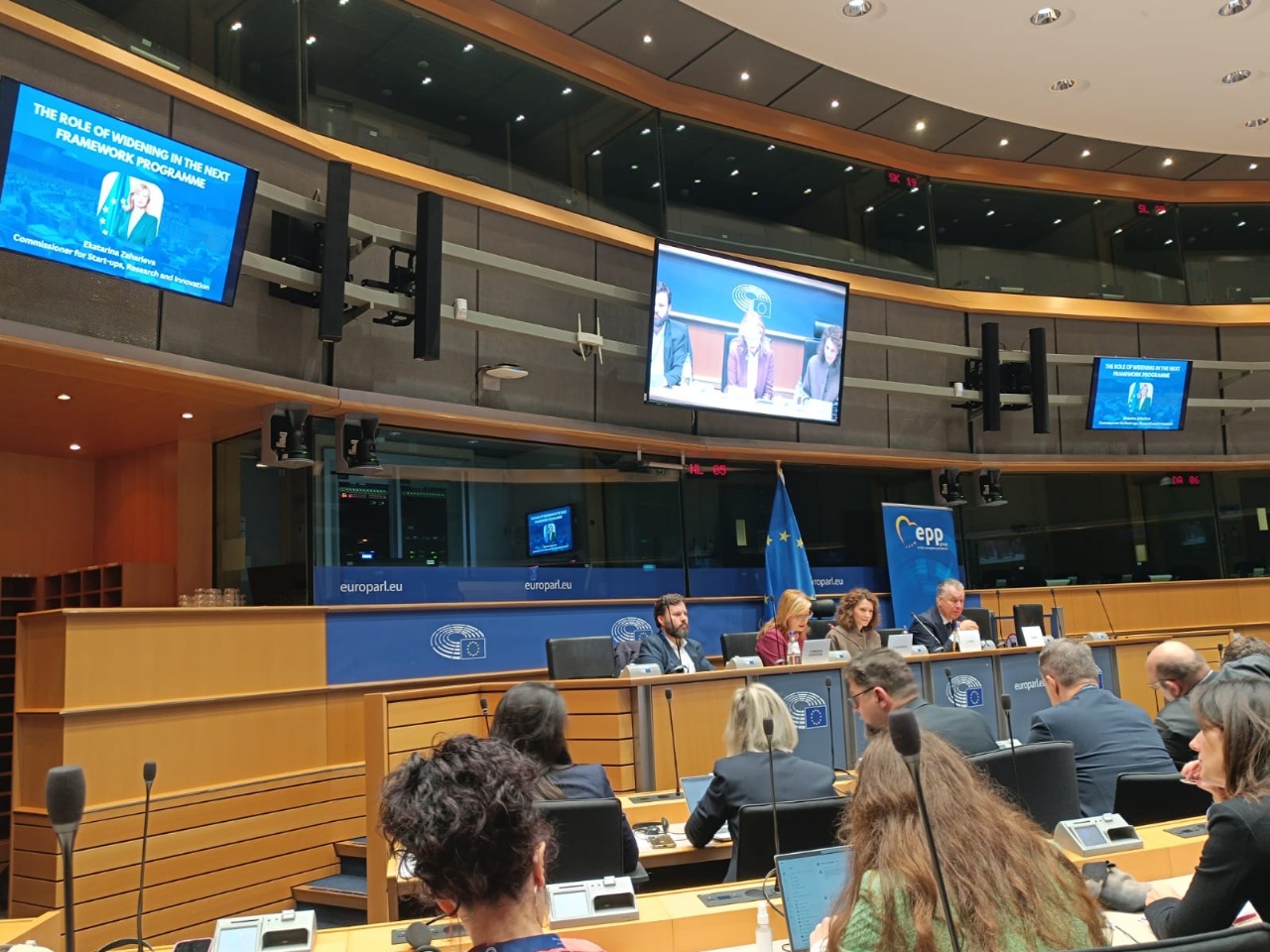
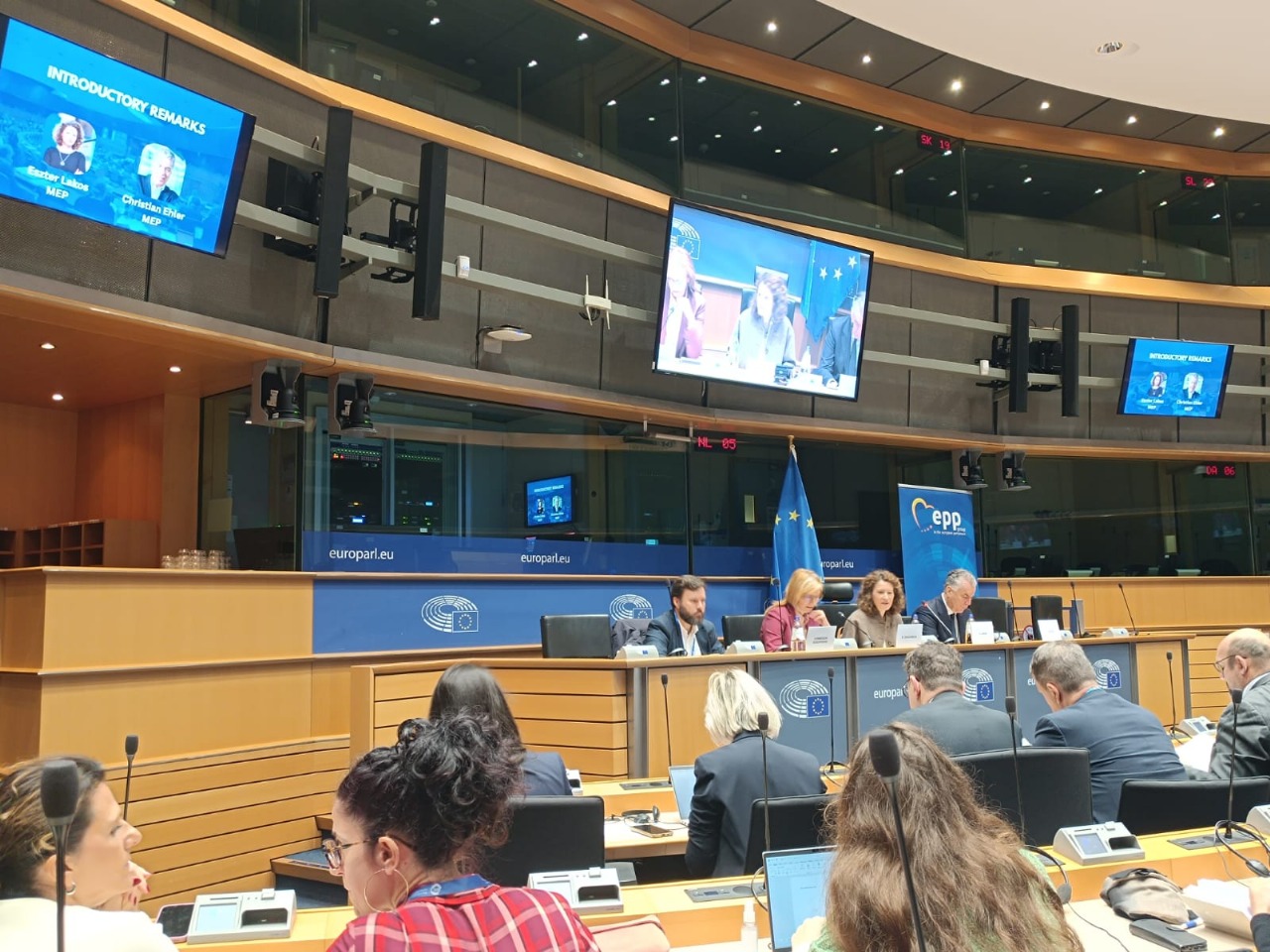
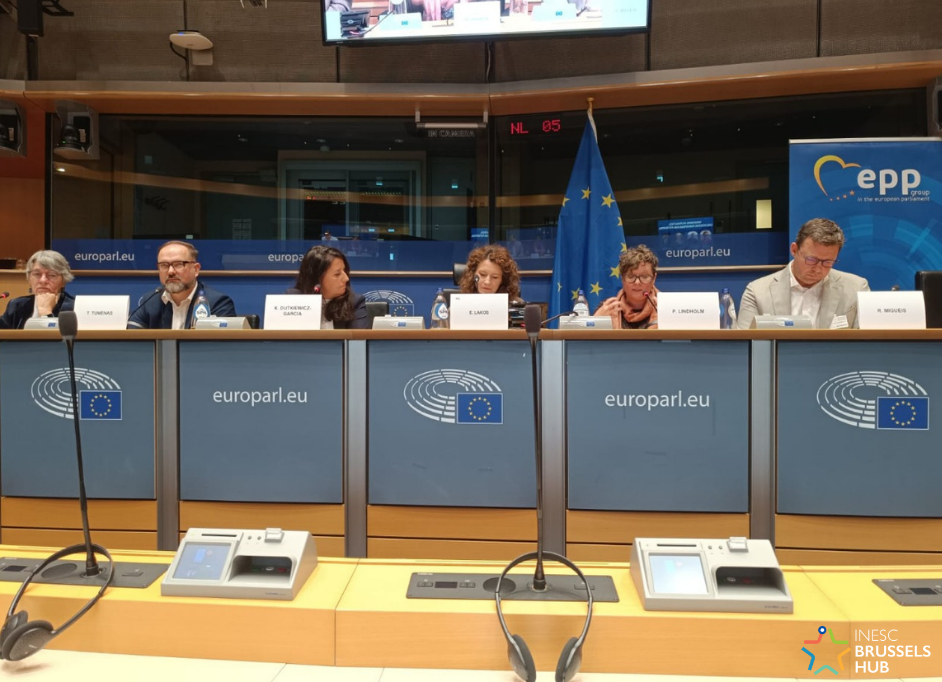
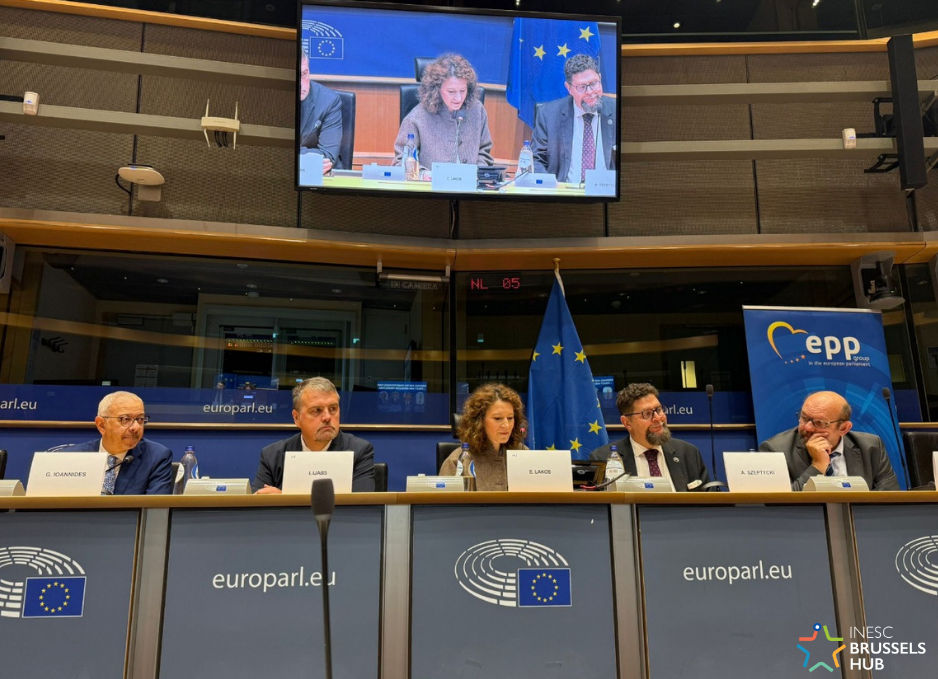
Widening Event at the European Parliament – 14 October 2025 titled: “Unifying European R&I for Global Leadership and Competitiveness”
The discussion focused on the future of Widening measures as a political commitment to keep talent choosing Europe, strengthening research capacity, and ensure that excellence and cohesion advance hand in hand.
Widening is not meant to be a permanent mechanism, but an instrument to strengthen capacities and enable countries to fully join Europe’s innovation mainstream. The transition category should therefore be viewed as a recognition of progress, not a punishment.
Speakers also highlighted that EU funding alone cannot achieve this goal, national investments and reforms are essential to create the right enabling environment.
Key discussion points
Opening table highlights
– Eszter Lakos raised the central question: How can Europe transform research potential into real impact and make Widening a true driver of European excellence and cohesion?
– Ekaterina Zaharieva emphasised that Widening is a political commitment, and its instruments should serve as temporary incentives rather than permanent support structures.
– MEP Christian Ehler called for a comprehensive Widening strategy with clear, measurable objectives integrated into the core governance of Horizon Europe, rather than treating it as a financial adjustment mechanism.
– Giorgos Ioannides underlined that the upcoming Cypriot Presidency aims for a flexible Widening model adapted to the specific needs of Member States.
Key takeaways
– Widening is a political, not merely technical file, essential for unlocking Europe’s full innovation potential.
– The transition category signifies success and should be understood as a capacity-building step, not a sanction.
– Horizon Europe alone cannot deliver impact, cohesion funding, national reforms, and domestic investments are essential complements.
– Building resilience requires learning from past experiences and addressing persistent national bottlenecks.
– Collaboration and mobility remain key: cross-border research cooperation and access to shared infrastructures are indispensable.
– Researchers must not be penalised for low R&I investments by their governments, highlighting the importance of a conditionality clause in future frameworks.
– Structural reforms will be necessary to design effective Widening measures in FP10.
– For the European Commission, Widening is a diversification approach, addressing the specific characteristics of a heterogeneous group of countries in R&I evolution.
– Capacity building must translate into impact, exploitation, and sustainability of projects.
– The term “Widening participation” better reflects the mix of long-term EU Member States and associated countries that can benefit from such instruments.
– Europe cannot remain competitive if innovation remains geographically concentrated; excellence must be harnessed across all regions.
– A tailored dual approach closer to each community’s needs remains key.
– Strengthening innovation ecosystems, interregional cooperation, and cross-disciplinary collaboration are critical for Europe’s future.
– Simplification remains a challenge; administrative burdens persist despite past efforts.
– The European Innovation Scoreboard is not an optimal metric for defining Widening or Transition countries, as it does not adequately track progress or trajectories.
– Associated countries should remain visible, as many offers inspiring examples of success and capacity growth and this should be passed as a mutual exercise for research leaders.