INESC Ecosystem

One ecosystem, five institutes, shared ambition
INESC was founded in 1980 and has established itself as a role model in the University-Industry relationship. INESC was the first institution in Portugal to demonstrate that through concrete support to sectoral and territorial economic development, research and innovation activities are a crucial element. The value of the activity conducted by INESC led to its recognition as a public utility institution in 1987. INESC´s holding associates are: Higher Technical Institute (IST), Portugal Telecom (PT) Group, University of Lisbon (ULisboa), University of Porto (UP), University of Coimbra (UC) and Correios de Portugal, S.A. (CTT).

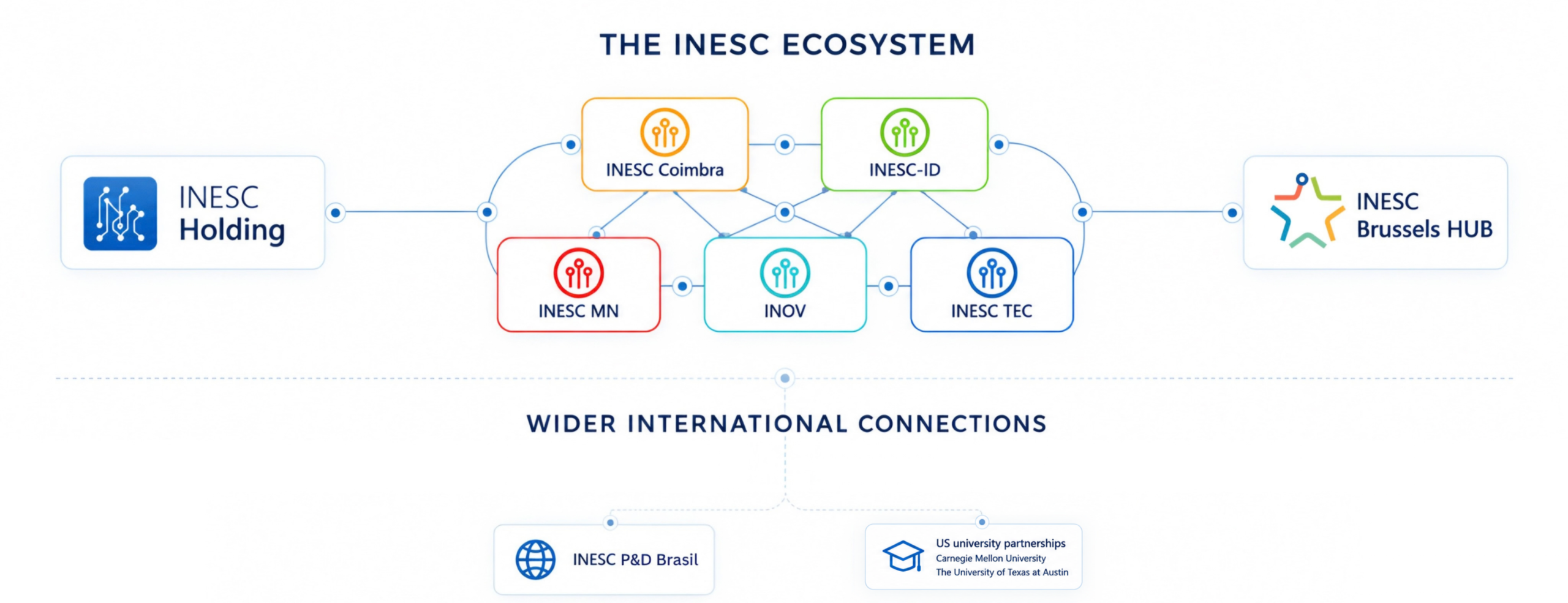
THE INESC ECOSYSTEM

One ecosystem. Five research institutes. Complementary capabilities.

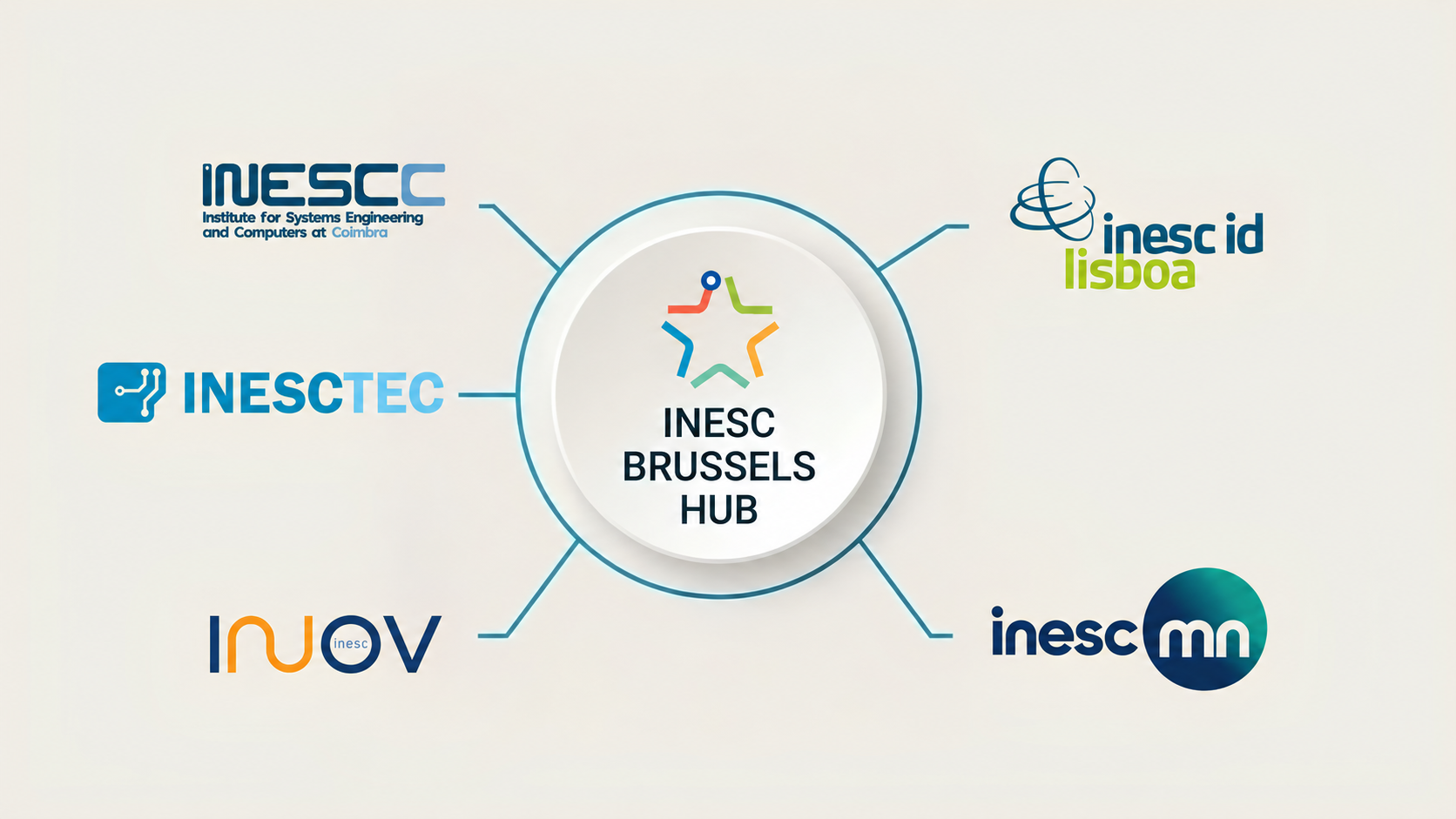
The INESC ecosystem connects INESC Coimbra, INESC-ID, INOV, INESC MN and INESC TEC. Together they bring complementary research, technology, infrastructure and innovation capabilities across Portugal.

INESC around the world

INESC has a strong international and nationwide presence, with collaborations and research partnerships across countries including Japan, India, China, South Korea, the United States and Brazil, as well as a representation hub in Brussels. In Portugal, its research teams are distributed across six universities and six polytechnic institutes, creating strong links between academia, research and industry and helping align scientific and technological education with economic and societal needs.
INESC in numbers

A current snapshot of the INESC ecosystem across research, people, projects, scientific output and European participation.

0 +
People, group-wide
€ 0
Total Revenue
0
HE Proposals Submitted
€ 0 M
HE Funding Accepted
0
Peer-Reviewed Outputs — Total
0
Events Organised

Five institutes. One ecosystem.

Explore the research and technology capabilities that make up the INESC ecosystem.

Connect with the INESC ecosystem

Explore the research, technology, infrastructure and innovation capabilities that make up the INESC ecosystem.