
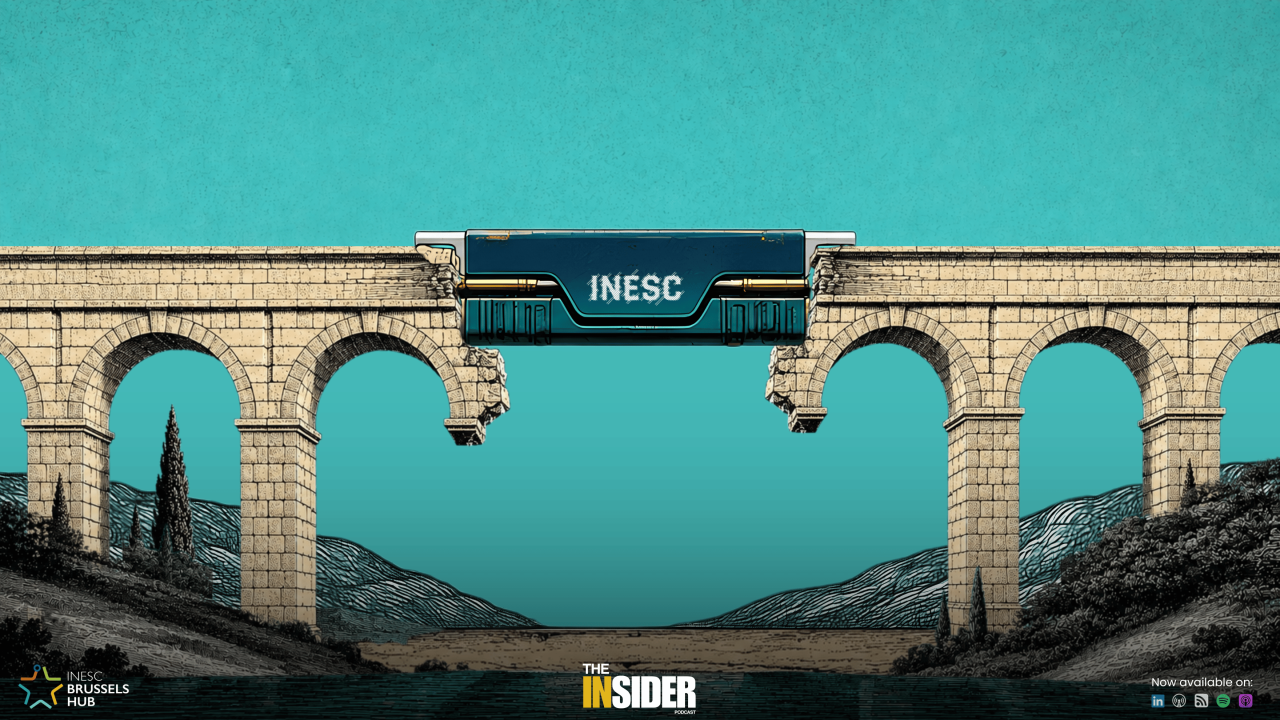
Europe is beginning to connect research, technology development, deployment and growth capital. However, capital at the end of the process or, in the expression that seems to be getting widespread, the “investment journey”, does not remove the bottlenecks in the middle.
Deep-tech ventures still need blue-sky research and, then, crucially, pilot validation, scale-up engineering, regulatory testing, manufacturing readiness, IP structuring and access to specialist facilities.
Europe’s new Charter of Access for Industrial Users recognises this operational gap: visibility, transparent conditions, clear contracts, safe IP handling, tailored support and cooperation across infrastructures are now part of competitiveness policy. However, once again, we are still in the beginning of a process that needs to go much beyond a set of principles and needs to be absorbed into everyday practice, cultural imagery and language used by the different stakeholders.
Research and technology organisations, such as INESC institutes, can create distinctive value here.
Across our five INESC institutes, capabilities extend from photonics, micro- and nanofabrication and advanced computing to communications, cybersecurity, robotics, energy systems, sensing, optimisation and industrial experimentation.
Many of them, though not as many as would have been desirable, will be under the spotlight during the ADRA Forum 2026, hosted by INESC TEC, in Porto, in October. Another opportunity will be the HUB’s Winter Meeting 2027, at the end of January.
We need to come together more often and create shared vision and capacity where that is pertinent and timely, if we want European and global exposure that corresponds to our already shared ambition.
Soon, on the HUB website, we will have a list of all the infrastructures across the 5 INESC institutes and this is a needed first step. However, the goal must be of a higher level, and that is to assemble pathways through which we more and more strongly contribute to advancing science and knowledge valorisation actually happens, meaning that a result or venture can obtain the expertise, infrastructure and validation it needs.
The strategic question for INESC is no longer only about which calls to join. This is very clear for me and for many beyond the borders of INESC institutes.
The key question is which indispensable function the INESC universe, embodied by the strength of each of its institutes as well as in a synergistic strategy among a variable geometry of internal groups, centres and teams, can perform inside Europe’s emerging research-to-technology system — and what must change internally to perform it reliably.
1. FP10: the handover between instruments is becoming strategic
The Council’s partial position preserves a self-standing Horizon Europe, but reinforces Member-State priority-setting and seeks a seamless connection to the European Competitiveness Fund.
The consequential issue is who shapes the journey from collaborative research to deployment.
2. Technology infrastructures: access is replacing visibility as the test
The new industrial-access Charter moves the debate from equipment lists to service conditions, contracts, IP, quality, tailored support and cross-border cooperation.
The implementation question is whether users can reach the right combination of capabilities quickly.
3. Portugal: EUR 45 million puts interface capacity into practice
A new COMPETE 2030 call supports CTIs and CoLABs in testing, validation, knowledge transfer, IP, certification, regulatory readiness and European networking.
It makes the connection between national implementation and the European infrastructure agenda unusually visible.
STATUS — CONFIRMED COUNCIL POSITION — FINANCIAL QUESTIONS REMAIN OPEN
The Council agreed its partial negotiating position on Horizon Europe 2028-2034 on 26 June. It retains a self-standing framework programme while seeking a tight connection with the future European Competitiveness Fund, intended to support a more continuous journey from research to deployment and investment.
The word partial matters.
Financial and horizontal questions remain within the wider Multiannual Financial Framework negotiations. At the same time, the Council position strengthens Member-State involvement in strategic priority-setting and develops the rules for Partnerships, research security, dual use and infrastructure support.
For research-performing organisations, the next contest is therefore not only the headline budget. It is the operating boundary between instruments: eligibility downstream, access to demonstration finance, the treatment of collaborative research, and the conditions under which knowledge moves towards commercial and industrial application.
What to watch: Parliament’s amendments, the final MFF settlement and the practical handover between Horizon Europe, the Competitiveness Fund and the EIC.
STATUS — COMMISSION CHARTER ADOPTED 27 JULY 2026
The Commission’s Charter of Access for Industrial Users to Research and Technology Infrastructures aims to shorten the journey from ideas to market.
Its six principles cover service visibility, transparent and high-quality provision, clear contractual rules, safe IP management, tailored support for companies and cooperation across infrastructures and data.
The Charter is voluntary, but its direction is operational. An infrastructure is increasingly expected to explain not only what equipment it owns, but which service it provides, who can access it, how long access takes, what it costs, how data and IP are handled, and how it connects to other facilities when a user needs a multi-stage pathway.
The Commission’s outreach campaign, including an industrial-access webinar on 22 September, creates an immediate opportunity for infrastructure hosts to bring forward practical barriers and credible good practices.
What to watch: the public map of endorsers, implementation examples and whether common access principles evolve into stronger European routing and support mechanisms.
STATUS — OPEN 12 AUGUST TO 15 OCTOBER 2026
COMPETE 2030 has opened a EUR 45 million call for scientific and technological knowledge transfer.
With a maximum FEDER co-financing rate of 85%, it supports recognised Technology and Innovation Centres (CTIs) and Collaborative Laboratories (CoLABs) in Norte, Centro and Alentejo.
The eligible activities are closely aligned with the European debate: pre-commercial testing and validation, demonstration and transfer platforms, IP management, standardisation, certification, regulatory framing, institutional capacity and integration into European and international networks.
The call is therefore more than another funding opportunity. It shows how national instruments can create the interface capacity needed to translate research into economic use.
For INESC, the strategic issue is how institute capabilities connect to eligible CTIs and CoLABs, and whether those relationships can assemble stronger cross-institute pathways rather than isolated proposals.
What to watch: the consortia that form, the technologies they organise around and the extent to which the instrument supports reusable institutional capacity.
Nothing linked yet.
Nothing linked yet.
Nothing linked yet.